Showing posts with label Massimo Cotto. Show all posts

Sunday, May 1, 2022

๐ŸŸฅ⚫️EXCLUSIVE INTERVIEW WITH MUSIC JOURNALIST MASSIMO COTTO⚫️๐ŸŸฅ

Photo credit: Massimo Cotto's Instagram, edit by Emanuela

Dear soulmates, today we are delighted to share with all of you the exclusive interview that the italian journalist Massimo Cotto gave to Placebo Anyway.

Many of us already know him from his interviews with Placebo: the one he did in November 2016 in Milan, just before the concert celebrating Placebo's 20th anniversary, and the more recent one he did in London on the occasion of the release of Never Let Me Go (see our post from April 3rd). But there is much more...

...Massimo Cotto is not only a true institution and one of the most influential voices in italian music journalism: he is an enthusiastic professional, with an extraordinary ability to tell stories, the stories of rock and beyond, passionate and amused about his work, with a humble, genuine and above all self-ironic human side.

By reading his biography, one would think that he has already lived at least five lives...he is an ever-erupting volcano, suffice it to say that he has written 71 books - even though he says he has not read them all - to name just one of the countless activities he is involved in...

Before leaving you to read the interview, here is a 'short' biography to let you know something more about Massimo Cotto (I can assure you that it was very difficult to try to summarise it as much as possible, but I tried my best).

I hope you'll enjoy reading it as much as I enjoyed chatting with him.

I would like to thank Massimo Cotto once again, on behalf of the whole Placebo Anyway Team, for giving us this interview.
With gratitude,
Emanuela


๐Ÿ”ทBIOGRAPHY๐Ÿ”ท

Massimo Cotto was born in 1962 in Asti, where he still lives.
He was a promising basketball player, until, at the age of 16, he was struck by the voice of a deejay on the radio: the next day he left basketball and introduced himself to the director of a private radio station and began broadcasting, kicking off a career that would see him engaged on several fronts: radio, television, newspapers, books, theatre and artistic direction. He is considered one of the most important Italian music journalists, certainly the one with the highest number of publications as an author.

๐Ÿ”ธRADIO: for 20 years he was a disc-jockey, host and then artistic director of Radiorai, later broadcasting for Radio 24 and Radio Capital, and for the last 10 years he has been hosting a morning show on Virgin Radio Italia.

๐Ÿ”ธTELEVISION: has been both TV host and TV author (among the most important are the Sanremo Festival and the Virgin Rock Live Special, as well as author for several Italian artists).

๐Ÿ”ธJOURNALISM: he was director of Rockstar Magazine and has collaborated with the main Italian and international newspapers (the American Billboard and the German Howl!. Today he writes for Italian newspaper Il Messaggero.

๐Ÿ”ธPUBLISHING: he has written more than 70 books, including many official biographies for Italian artists. He has also written "Leonard Cohen: Canzoni da una stanza” (Songs from a Room) and, again on Leonard Cohen, "I Famosi Impermeabili Blu" (The Famous Blue Raincoats), which contains, among other things, nine interviews conducted with the Canadian artist over a period of 25 years. He has translated and commented on the lyrics of Tom Waits (first in Italy), Bruce Springsteen, Bob Marley, Janis Joplin and the Grateful Dead.

He has also written two novels for which he has received literary awards.
Etc, etc, etc...

๐Ÿ”ธARTISTIC DIRECTIONS: Radiorai for 4 years, SanremoLab and Area Sanremo, in addition to numerous festivals scattered throughout Italy like Festival di Castrocaro.

๐Ÿ”ธTHEATRE: He invented the so-called fireplace theatre, based on the desire to gather around the hot flame in the living room and listen to stories. In 2005 he staged his first play, 'Cry baby, Janis Joplin's last night'. He is currently on tour with the show “Decamerock”, based on his 2020 book by the same name.

He has won many awards. He is also a Knight of the Order of Merit of the Italian Republic.

Photo credit: Massimo Cotto's Instagram

๐Ÿ”ท๐Ÿ”ธ๐Ÿ”ทINTERVIEW๐Ÿ”ท๐Ÿ”ธ๐Ÿ”ท


Hi Massimo, welcome to Palcebo Anyway.
After so many years as a journalist, have you developed kind of a 'modus operandi', kind of an approach to the artist, a universally valid attitude to take home an interview with which you feel satisfied?
๐ŸŽค There are some common elements to all interviews. Preparation, firstly. Re-listening to records and reading a lot of previous interviews, to select which topics to develop and which not to cover. I often read answers given to other journalists and from there I start asking other questions. These are basic things that should be taken for granted. But it isn't so.
I remember a lunch with Mick Jagger's manager in London before I met Mick, who was coming out with a solo album. He kept asking me questions about the record that seemed randomly thrown around, but it was clear he wanted to know if I'd really listened to it.
I laughed and said, 'Do you think I'm going to interview Mick Jagger without having listened to the record?'
He said, 'Most people do, unfortunately.'
But no matter how much you prepare, it's the empathy you create with the artist that counts.


You are, to all intents and purposes, a sort of living 'music encyclopaedia'. Of all the 'close encounters' you have had with the greatest artists in music, which one or ones do you still remember with emotion and participation?
๐ŸŽค I have interviewed both David Bowie and Leonard Cohen nine times and they are my best memories.
Bowie in Berlin, London, New York, Rome and Milan. Cohen everywhere, but mostly at his home in Los Angeles.
If there was a mechanism to erase memories, I would ask for these encounters to be put at the bottom of the list.
Everything was perfect, both the outline and their words.


Were there any times when it didn't go as you expected?
๐ŸŽค I don't remember interviews that disappointed me. Of course, that time in Munich when Nick Cave threw up on me was not pleasant. He was at the peak of his addiction and he wasn't feeling good. I delude myself that it wasn't a consequence of a question I asked.


What percentage is 'spontaneous' and what percentage is 'planned' in advance in an interview with a musician or a band?
๐ŸŽค Let's think of a concert: you can rehearse all the time in the world but, luckily, it will never go exactly as it did when you were rehearsing. You don't know what mood the artist will be in, whether he will be melancholic or cheerful, willing to open up or not.
To give you an example, one of my best interviews was with Elton John in Verona. At one point he opened up, he told me about his odyssey with drugs, he started crying, he said beautiful, touching things. Everyone in the room was moved.
People at the record label were amazed, because they had never seen him like that, so they wanted to buy the interview and publish it worldwide. Yet not long before, I had interviewed Elton John in Oslo, Norway, and he had said normal, almost ordinary things.

Massimo Cotto and Paul McCartney. Photo credit: Massimo Cotto's Instagram

A question I've often asked myself thinking about people like you who, not only in the musical field, make their passion a job.
Have you ever found yourself with sweaty palms or a trembling voice thinking of the artist you were about to interview? Or, as a journalist, have you always managed to maintain a certain emotional detachment,a balance?

๐ŸŽค I am always happy and excited when I meet an artist, because the journalist always brings along the fan, the music lover. I live my job as the greatest gift life could give me, from a professional point of view of course.


In some interviews you talked about the moment, the exact event that completely changed your life when you were 17. Would you tell us about it?
๐ŸŽค I was 17 years old, I was a promising basketball player.
I was on my way to basket practice when I hear a voice on the radio, talking about things I don't understand: fluttering dresses, glass doors on the veranda slamming.
There are two people: a girl called Mary and a man who invites her into his car. He says that those two lanes can take you anywhere, but that the ride will not be free, he talks about redemption, roads, ghosts and dreams.
I don't understand, but I'm hooked.

Then Bruce Springsteen's 'Thunder Road' -which I'd never heard before- comes on...
'There were ghosts in the eyes
Of all the boys you sent away
They haunt this dusty beach road
In the skeleton frames of burned out Chevrolets'
...and by listening to the lyrics I realise that the speaker had made up a story out of the lyrics.

And then I say to myself 'This is what I want to do: tell stories and talk on the radio'.


Listening to the radio and to radio speakers today (apart from you of course) do you think you could find through words, through a story, the same dazzling inspiration as then?
๐ŸŽค Radio world has changed a lot since then. It's hard to relive those moments because the speakers are asked to do something different nowadays. But I'm not nostalgic. Nostalgia is quicksand, one wrong step and you're finished. I look at the past as an elastic band stretched towards tomorrow, otherwise you'll get old quickly.


Music, like other expressions of art, ends up permeating people's lives in every aspect...for you, has it remained confined to your work? Is there something in this sense that you share with your family?
๐ŸŽค If you love music, your whole life is music, even when there is no sound. There is music in everything you do. You just have to know how to listen to it.

Massimo Cotto and Alice Cooper. Photo credit: Massimo Cotto's Instagram

You have written many books, which is the one you are most attached to among them? And is there a writer you are inspired by when writing your books?
๐ŸŽค Of course I'm attached to all the books I've written, but my absolute favourite is 'Rock Live', because it's my most personal.
I'm not consciously inspired by any writer, but I've learned a lot from Riccardo Bertoncelli and from American writers such as Hemingway, Fitzgerald, Paul Auster, Pat Conroy and especially John Irving.


At the moment, in addition to your daily appointment on Virgin Radio Italia, you are touring a theatre show, 'Decamerock' (from the title of your book published in 2020), in which you talk about cursed and fascinating rock lives, both on stage and even more so behind the scenes, in their lives away from the spotlight. Upcoming projects?
๐ŸŽค I have a novel coming out in September. It was a necessity, not a desire to get away. After so many years spent recounting other people's stories (lives), I felt the need to invent. It's a very atypical noir. I consider it a present for my 60th birthday, which I am only on my identity card. Otherwise, I am not yet of legal age.


Of course, I can't help but ask you about Placebo, and I'm very curious about your opinion.
Have you listened to Never Let Me Go? What is your impression about their comeback, about the words and the themes chosen, and about the music as well?

๐ŸŽค I love Placebo because Brian Molko is not one to adjust. He has an uncanny ability to play with words and to draw you in. In his songs I always feel urgency to tell, anger and sweetness, the desire to feel part of the world even when you don't like it, the tension between isolation and joy. In this sense, we are mirrored in him and his songs. Regardless of our lives, job, whatever we do, nationality and age, we are all a little bit Brian Molko.


You've said that the words of the artists you've interviewed over the years, don't just remain on the tapes you painstakingly unspooled to write your book 'Rock Is The Answer', to name one, but they often echo in your head and you carry them with you. Are there any Brian's words or statements or lines from their songs that have resonated in your head?
๐ŸŽค "Soulmates Never Die". Of course he wasn't referring to love between two people, but to something more universal. He referred to those elective affinities that make us feel glued to someone even though we never met them.


Do you have a funny memory or anecdote related to the interviews you did with Placebo?
๐ŸŽค In Milan, in the dressing room at the Assago Forum, I asked him: 'Will you mind if we take a photo together?' He said: 'Yes, I do, but I'm happy to do it anyway'. It has all the Molko I love in it.
Years later, we are in London. I am on the sofa, waiting for my turn to interview him. He drops by for a bite to eat. He greets the press absent-mindedly. He goes up the stairs. Then, after a few steps, he stops, turns around, looks at me, points at me and says: "We have met before, haven't we?".
How he remembered that is really incredible.

Massimo Cotto and Michael Stipe. Photo credit: Massimo Cotto's Instagram

In your book 'Rock Is The Answer' you talked about the fragility of being an artist (Chester Bennington, Kurt Cobain), because of a greater sensitivity and a greater ability to read between the folds of the human soul.
I quote: 'Songs often have the answers, those who compose them do not. Fans worship you like a God, but you're as fragile as all human beings'.

๐ŸŽค Is it something you perceive in Placebo too? In Brian Molko in particular?
Brian was brilliant in realising that his frailty couldn't be overcome, but could be wooed and turned into art. To quote Cohen, my and his hero, 'we make ourselves strong through our weaknesses'.


Let's talk about social media. You already know Brian Molko has very precise and unflattering opinions on the subject. You look more friendly, you keep a connection with traditional media but you are always present on Instagram for example, isn't it?
Placebo's Instagram profile was completely emptied last year, and the oldest post currently dates back to 13 September 2021: since then rather 'service' communications and no personal content. Brian recently said that artists are under a lot of pressure from social media and rather than focusing on their art they become content creators for them.
What do you think about? What has the music world lost and gained with the advent of social media? Is there a way for artists to use it in their favour without being crushed by it?

๐ŸŽค I don't understand, honestly, the struggle against social media, by anyone, not necessarily Brian. As long as you use social media, as I think I do, without becoming a slave to it, I don't see any problem.
We are also those who follow us. Chiara Ferragni has her audience, I have mine.
What is really important is to be aware that social media are part of the real world, but they are not the real world.
Let's put it this way: social media stand to life as mobile phones at concerts. Taking a photo or video during a concert is fine with me. If you take photos and videos throughout the whole concert, I'm less OK with that.


I remember you said that talent is just the smell of the cake, but not the cake itself. What do you think there is in Placebo besides the talent that made the band so long-lived, but also so alive, so relevant after 26 years?
๐ŸŽค Besides what I've already said, I think the real guiding light of Placebo is Brian's unique and unmistakable voice. There is no voice like his in the world music scene.


You have been an author for the Sanremo Festival in several editions. Many of us remember the infamous “San Remo Incident” from 2001:

On 2nd of March Placebo performed “Special K” at the televised awards show Festival di San Remo in Italy, but the show didn't go as planned. To make a long story short, it ended with Brian smashing his guitar, provocating the shocked audience and finally proudly bowing to them before leaving stage. His violent outburst was televised live to 15 million Italian households.

SPECIAL K – SANREMO 2001
https://bit.ly/33yPJSq

But the festival has changed a lot in the last years, I think for example about the participation of Maneskin, much closer to Placebo's style than to the festival's one, and yet they were very successful.

Do you think Placebo from 2001 would be received differently in 2022 by the festival audience? And how do you think 2022's Placebo would deal with the festival and ihants audience?
๐ŸŽค That year, in 2001, I was in the stalls, in the front rows. It was great, because the punk spirit in me found nourishment and joy. The Ariston Theatre audience, of course, did not understand, also because most of them had never heard about punk or rock before.
Surely today Brian wouldn't behave like that anymore, for the simple reason that he would never do something in the same way as he has already done before.
Then it made sense: Sanremo Festival was the bourgeoisie opposed to rock. To not be crushed you had to ignore everything and everyone like Springsteen did: he went on stage and left immediately after the performance, or do what Placebo did. Which was kind of like saying, 'Hey, we always remain ourselves, even here in this context'.

THANKS SO MUCH, MASSIMO! 

Original Interview by Emanuela, Placebo Anyway
Transcript and translation by Emanuela


If you want to listen again and review the interviews Massimo Cotto did with Placebo:

Milan, Assago Forum, November 15th 2016:
๐Ÿ‘‰ https://bit.ly/3kufLPm

London, Strongroom Studios, February 2022:
๐Ÿ‘‰https://bit.ly/3jitKYd

Post by Emanuela

#Placebo #PlaceboAnyway #PlaceboWorld #BrianMolko #StefanOlsdal #Molko #Soulmates #PlaceboHistory #PlaceboInterview #PlaceboAnywayInterview #ExclusiveInterview #MassimoCotto #PlaceboAssagoForumInterview #NeverLetMeGo #Placebo8 #Placebo2022 #VirginRadioItalia

Saturday, April 23, 2022

๐Ÿ’ PLACEBO INTERVIEW TO VIRGIN RADIO ITALIA!๐Ÿ’ 

Today I'm really glad to share with you the interview Brian and Stefan did with the italian journalist Massimo Cotto of Virgin Radio Italia on the occasion of the release of Never Let Me Go.

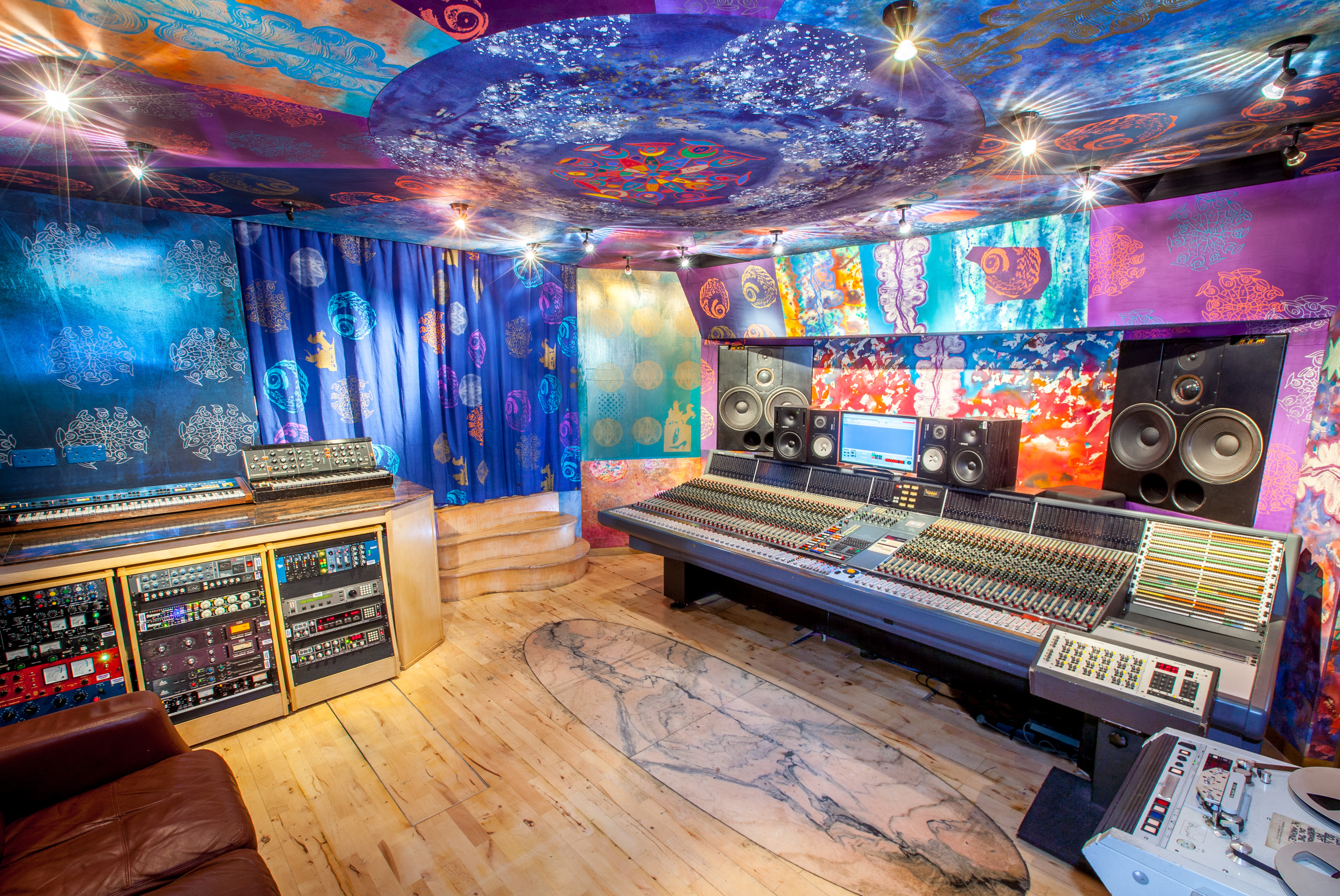
It was recorded at the Strongroom Studios in London by the end of February, and was broadcasted last March 24th on Virgin Radio Italia, the night before the release of the new album.

Before leaving you to the pleasure of this interview, please allow me to thank Massimo Cotto, on behalf of all of us in Placebo Anyway, as he is not only a great music journalist, with a considerable professional experience like few others, but also a kind, helpful human being.
So, enjoy the reading!

Photo Credit: Screenshot from the interview (Virgin Radio TV)


Massimo: Thank you so much for being with us. I'm so happy to have you here and talk about this new beautiful record.
๐Ÿ“ข Brian/Stefan: Thank you.


Massimo: The first question is for Brian: has your approach to your songwriting changed for this record and in general for all the years?
๐Ÿ“ข Brian: I think particularly with this record. I was a little bit worried about going back to our classic tried and tested ways of songwriting, which kind of involved spending three months in a rehearsal room jamming...uhm...you know, a lot of kind of not making decisions, and just kind of seeing what happened, and a bit more kind of less affair but you know, sort of writing something a bit like...like a band in a room, you know.

This time around I kind of.. I wanted to mess with the process. I wanted to kind of...I was afraid of...you know... I needed something new, a new challenge. I was afraid of not being able to engage with the old process, because we had done it so much before. So the first thing that kind of came to my mind was "Why not do everything backwards!" you know "Why not take the last creative decisions first, and see where that takes us? Why not just invert everything just to push, push me as a writer, and hopefully as a band out of our...our comfort zone, and to try and find a new vitality for us, and a kind of a reason for continuing to do what we do?" And that is to feel I suppose like you are progressing, like you are improving, like you are evolving.

And for me the process is often more enjoyable than the result, so I needed, I needed to put like a kind of...an alienation effect inside, inside the process: make it difficult, make it uncomfortable, make it new so that I wouldn't just kind of fall back on things that I had done before that. And that it would hopefully propel us into...into new sonic territories you know! Naturally as the recording progresses you know these kind of limitations that you put upon yourself you know they as more people get involved, you know, it kind of falls away! But I think this record does remain kind of the one, the most studio creation that we've ever done. Because I'd say for about 70 percent of the time it was just me and Stef, you know.

Photo credit: Stromgroom Studios

Massimo: This record is a great balance between hope and grief, happiness and sorrow...uhm...the necessity of being alone but also stay with other people...at least to me...very powerful but at the same time a little melancholic. Does it make sense to you or?
๐Ÿ“ข Brian: I'd, I'd say a little melancholic is quite an understatement! (Brian laughs, while Stef chuckling) I think there's a great sadness in this record you know, uhm...and there's anger as well you know. But they're very, they're much more connected than, you know, these emotions are much more connected than we think on the surface. Often sadness is anger turned inward, towards yourself, you know.

So, what's important for me is that each song is told from a human perspective, from the emotional perspective. Otherwise especially if you're writing about things like CCTV, surveillance, the environment, freedom, claustrophobia, it runs the risk of becoming polemical or a diatribe, you know. And nobody really wants, I don't think, wants to listen to music you know to be educated. They want to engage and, you know, and have an emotional experience. So for me no matter how political a song may appear on the surface, it needs to be told from a human perspective, the emotion needs to go into it. And because it's told from the point of view of a character, like almost like a charachter in a book or something, you have a freedom with reality, you know, you can create different realities in order to communicate that emotion...but as long as there's a human perspective there, as long as it feels like it's coming from a human place.


Massimo: I always thought that Placebo was not just a band, I mean, not just music, it's just, it's also a band who try to, through music, motivate people to push them to be free, to allow to express themselves, which is something more than music. Do you agree?
๐Ÿ“ข Brian: I would describe those as being side effects, you know (Brian laughs while Stef chuckling), because we never, we never set out to do that. That wasn't our modus operandi at the beginning, you know "let's form a band and try and change people's lives". No, let's form a band and try and change ours, you know. Let's write music that feels vital to us, about what we feel absolutely necessary to express. Now I guess the kind of the repression that we felt as we were kind of growing up, because it was ours, was very very personal. And then when we met again, we realized that we had that feeling of being, being an outsider in common, you know, and so there was two of us. I mean we didn't expect that, that there were hundreds of thousands of other people who had grown up feeling like outsiders as we had, you know. That wasn't a strategy, it was, it was about being given the opportunity to express yourself truthfully, it was about a necessity, a kind of a do or die. If somebody's going to give you a stage, are you going to be your authentic self or are you going to be something else that you think people are looking for? (Stefan nods)
I think it was impossible for us to not be our authentic selves at that point, you know. We needed to express ourselves that way, uhm...but we didn't...we set out to change our lives, not other people's.
I still find it very humbling to think that, that's possible, that a song that we come up with, you know the two of us, can have such an emotional effect on people. It's, it's an extremely privileged position to be in I think, you know, but it's something that we discovered after the fact.

Photo credit: Stromgroom Studios


Massimo: But did some way Placebo helped you to find a place in the world, apart from the musical side?
๐Ÿ“ข Stefan: Yeah, I think we were trying to find a place where we belonged, you know. And I don't think we could, we couldn't really find it for a long time, but I think with Placebo we've given ourselves that opportunity to create, to create that place, a place where we can express ourselves, a place where we can kind of be ourselves. And you know, I think that's kind of what we've held on to over all these years and to react to it in a very emotional way: if it feels right then, then it is Placebo, you know. And I think that's kind of with the way we approach making music as well a lot of times, like if we respond to it an emotional way where it feels right then, then it's Placebo.
So there's all these kind of elements, that kind of, you know, makes makes this little world that's that's kind of our world, where you know where else I feel a lot of times where sort of life makes sense.
๐Ÿ“ข Brian: I think, I also think that this on a human level there is enormous value in finding a purpose, in feeling that you have a purpose, you know, and also in feeling understood. Even just by feeling understood by your family or by a small circle of friends but, to create a piece of music or a piece of art, and then to understand that there are thousands of people out there who also understand is an incredible revelation, you know, and it also feeds into your sense your sense of purpose, because then you feel like, well, "I'm achieving something on a human level", you know. And if it's just communicating an emotion which makes one person feel a little bit less alone because they feel like somebody else understands at a time in their lives where they feel the most misunderstood I think there's a great value in that, you know but again a side effect, you know? It's kind of "shall we start a band to go out there and find all the people who feel misunderstood like us?" You know, that wasn't really a strategy, it was just like "should we start a band and make some noise!" you know (laughs).


Massimo: What's more important, the meaning of a song to you or what people think of it? I think of 'Beautiful James' where everyone can have his own opinion.
๐Ÿ“ข Brian: Well, hopefully everyone can have their own opinion for every single song on this record, that's why I'm really reluctant to explain what it means to me. Because I feel that what it means to me would get in the way of meaning for the listener, you know. If there's enough ambiguity in the song for the person to make an emotional connection to it, then they're able to create their own personal story wrapped around that song. Because once you put it out there, it doesn't belong to you anymore, it's not yours, you know. It's it's alive in the hearts of others and it has, you know, significance in the hearts of others. And if, like when you go to see a Steven Spielberg movie, you're being told how to feel all the time, you know, especially with the music, I really don't want to do that. I want to leave enough space for each individual to connect to it personally, and then to live our their own story. So when people say ask "Who is Beautiful James?", It's just like "Well, who is it to you? What does it mean to you?". And that's becoming much much more important to me, as we continue to make music.


Massimo: How did that song come out? Is it true that the first title was "Bad Piano"?
๐Ÿ“ข Brian: Yeah, because it was, I played it really badly on a piano at 5 am during a kind of a period, a prolonged period of insomnia where I was kind of delirious, you know...you know like when you get a bad fever and sometimes you hallucinate, you know? If you don't sleep for two months that that starts that, those kind of hallucinations or deliriousness kind of start to happen. And melodies were just kind of dropping into my head, and phrases were just kind of dropping into my head, and normally in the hours when everybody else is asleep. So, it that kind of happened with Sad White Reggae and happened with Beautiful James. It's just, you know, crawling to the piano with your telephone, to just too badly play something you know just so it's captured, so I don't forget it, so that in a couple of days I can give it to Stefan and go "Could you please sort this out? Could you please do something with this? There's something in here, you know, but c'mon you're the musician! I'm the bad piano player, you know, you're the good one!".
So yes, it was called "Bad Piano".


Massimo: Good. This is a stupid question, uhm...two songs, "This Is What You Wanted" and "Went Missing" remind me someway Leonard Cohen and Neil Young, even though there's nothing in common in the musical style. Don't you think that there's a sort of emotional geography that goes over the styles and the similarities?
๐Ÿ“ข Brian: Oh, absolutely! Oh totally! You know...I mean, it's interesting that you mentioned Leonard Cohen and Neil Young because they're both complete heroes of mine, so that's like an amazing compliment you know....

Yeah, I mean, I'll give you an example, you know. I mean, when I was in my 20s, every now and again I would go to a concert, and this concert would be so near to perfection that it would make me cry. But I remember the two times, the reason I remember these is cause these two bands are so different. I remember going to see Pulp in a theatre at their, you know, at the height of their fame, when different class came out, and it was such perfect pop music that it made me cry. And then when I went to see Shellac, which is Steve Albini's band, you know, which is just brutal industrial aggressive noise, but there was something about this band that was so perfect. Even though such a completely different style that it also made me cry, you know.
I don't know if that answered to your question.

Photo Credit: Screenshot from the interview (Virgin Radio TV

Massimo: Yes, it does (laughs).
Are you excited by the idea of coming on tour again?
๐Ÿ“ข Brian: I think we're afraid honestly, more than anything (laughs while turning to look at Stefan)
๐Ÿ“ข Stefan: (laughing) Yeah, but keep up the courage!


Massimo: Why do you say that?
๐Ÿ“ข Brian: Well, I think if, well, I think because of the enforced sabbatical. I think that's been... something that's never really happened to us before. Up until the point of lockdown, you know, we'd been on a kind of a momentum of like 25 years. So we kind of got, gotten used to doing so many things like they were kind of second nature you know. And then, when lockdown happened and then we had to take a two-year kind of enforced sabbatical, we lost our momentum. We fell off the treadmill that we'd been on for 25 years, and then we had all of this time to catastrophize, disaster (bait), think and overthink about everything that being in a band meant. And we'd never really kind of had that opportunity before!
๐Ÿ“ข Stefan: No
๐Ÿ“ข Brian: And this might be, this would be an example of how thinking, a little bit too much thinking, is not good for your health, that kind of thing (laughs).
So we've maybe had too much time to think about what being in a band is, because we have a lot of experience from that and how it affects us emotionally and, you know, just as human beings.
And we probably had a little bit too much time to consider all of these things.
๐Ÿ“ข Stefan: Yeah, I think the sort of the balance has been thrown out of whack. Before we were trying to slot our personal lives into the Placebo schedule, and all of a sudden we get kind of a personal life back.
And now to try to put Placebo back into that. It's the first time since the band started, really.
๐Ÿ“ข Brian: So it's, you know, it's an odd time in history and an odd time, I think, for musicians like us who have a tendency to overthink (laughs). So perhaps that's where a certain shyness comes or a certain apprehension, trepidation, a little bit of fear.


Massimo: What's your biggest fear?
๐Ÿ“ข Brian: Well, I mean what we do is very strange. We put ourselves, even though we are shy people, we put ourselves in a place where we're just completely exposed! Yeah, yeah, so it's an odd psychology. One has to wonder why uhm...why we feel it necessary to seek such validation from so many people in such an odd, contrived context.
And we've had too much time to think about that as well, you know. I think that you can think yourself into any kind of fear if you have too much time, too many possibilities, too many...you know! If you just do something, and you just keep doing it, then you don't really have time to sort of pause!
๐Ÿ“ข Stefan: Yeah, action is the enemy of thought.


Massimo: So we have to think less!
๐Ÿ“ข Brian: We (looking at Stefan) have to think less! Definitely, yeah.


Massimo: Italian people love you. You have so many fans, so many fan clubs. What's Italy to you? Do you have a particular feeling towards Italian people?
๐Ÿ“ข Brian: I have Italian blood so, you know, my grandmother was from Bologna, so maybe that has something to do with that!

Photo credit: Stromgroom Studios

Massimo: and what about you (Stefan)?
๐Ÿ“ข Stefan: I don't know, I always, I think I'm drawn to, coming from the north of Europe, I think I'm kind of drawn to, drawn south, you know, where Italy is.


Massimo: One last question: in Sourrounded By Spies you use the William Borroughs' cut up technique. Is it also because in these days we are all just a little piece of the global communication? Apart from the fact that David Bowie used it and it's a good technique...but does it have a symbolic meaning?
๐Ÿ“ข Brian: No no, it was just, it seemed appropriate for me, to take all of these pages of words and to just kind of like mix them up, you know.
I couldn't form, I knew kind of what I wanted to do, but I couldn't form a classical narrative, a straightforward narrative with the material that I wanted to use. So it seemed, it just seemed evident for me to kind of to William Borroughs to David Bowie and to Jackson Pollock, to John Cage, to take it and throw it up in the air, see where it lands, and then get a new perspective that way.
But there was something about, I think the mood of the track, which also kind of pushed me in that direction. I had pages and pages of lines, and some of them, I was never going to make a story, you know, so I had to find another way.


Massimo: Is there anything that you would like to wish to Italian people?
๐Ÿ“ข Stefan: Live long and prosper! (smiles)


Massimo: Thank you so much!
๐Ÿ“ข Brian/Stefan: Thank you!

Original Interview:
https://bit.ly/3jitKYd


Interview by Massimo Cotto - Virgin Radio Italia
Transcript by Emanuela

Post by Emanuela